Monday, 2 February 2015

They can't all be winners, but we need bold urban design

Last week, the Guardian held a masterclass event in London on Writing for Cities which featured speakers Oliver Wainwright and Owen Hatherley, professional critics of architecture and the built environment.

While the event was geared predominantly towards amateur or up-and-coming writers and bloggers (who live and work in London), there was also plenty for those of us who work in the regional property PR sector.

Wainwright’s presentation in particular was an interesting insight into the thought processes and approach of a professional critic of architecture and urban design, particularly in terms of the developments that he felt reflected the lackadaisical attitude of many city planners.

This was represented by a slide showing a full two-page article written by Wainwright from an April 2014 edition of the Guardian.

Entitled ‘Horror Storeys: the 10 worst London skyscrapers’, the piece (which can be found here) outlines various designs that Wainwright scathingly brands as a ‘shiny blue cucumber’, ‘a stack of hard drives’ and ‘two oversized air ducts’.

Supposedly representing the very worst that the city has to offer, the article is the author’s personal portfolio of the grotesque, outlandish and undesirable examples of urban development to be found in London.

Vauxhall Tower: tall

I didn’t – and still don’t – agree with all of Wainwright’s selections: the 50-floor Vauxhall Tower (“liked a cigarette stubbed out by the Thames”) and Stratford Halo (“wrapped with dubious purple pinstripes and topped with a jaunty quiff”) are at least to me, not aesthetically unappealing.

And there’s the crux of the issue: design is always subjective. What I consider to be an epic monstrosity, the person standing next to me may see as the epitome of utopian splendour.

This is surely the great thing about the ongoing evolution of our cities; after all, shouldn’t it be the remit of architects – as with all artists – to push the boundaries of their craft and inspire debate and discussion through their designs?

Exterior of the Selfridges part of the Bullring
In Birmingham some of our most instantly recognisable, widely appreciated and now greatly loved buildings have come in the form of extravagant and unusual design. The mosaic of silver disks that form the façade of the Selfridges section of the Bullring, for example, is such an instantly recognisable feature of the Birmingham skyline that it is now visual shorthand for the city.

Likewise, the Cube is a fine example of a building that remains unfettered by the restrictions of an unimaginative mind and while it generated considerable debate when it was announced, it has now slotted into the city’s skyline like a cube-shaped peg into a cube-shaped hole.

Other examples of where the city has dared to roll the dice on a design include the new Library of Birmingham with its gilded fez of a rotunda perched on top of its stacked design, and Bournville College out at Longbridge, both fantastic and unusual additions to the city.

The plans that we’ve seen released this week for the delivery of the building to replace the brutalist almost window-free 103 Colmore Row on the corner of Newhall Street are also exciting, offering a contemporary soaring tower that will sit well amongst its classic cohorts in the Central Business District.

Admittedly, not every design that pushes the boundaries is a winner and dipping back into Wainwright’s article he and I clearly agree on the Odalisk hotel and serviced apartment scheme in Croydon, with its schizophrenic cut-and-paste facade. Ugh.

Clearly there is more at play here than just the aesthetic of a building: it needs to be considered within its wider context, how it impacts on existing buildings, its functionality and whether it is fit for purpose. But for the most part, the complaints and comments that we see raised from planning officers, bloggers and members of the public focus firmly on the façade. After all, that’s what you’re going to be looking at.

Interim public realm proposed post-demolition of 103 Colmore Row
It should be noted that Wainwright has also written a piece outlining what he feels are London’s 10 best high-rise additions to the skyline. As with its counterpart, there were a few inclusions in the list that resulted in a raised eyebrow, not least the Trellick Tower, a 31 floor residential building completed in 1972 that rears over the “prim terraced streets of Notting Hill”.

Praised for its clever design of arranging its 200 flats into a series of stacked ‘streets’, it reminded me instantly of an offcut from the Park Hill estate in Sheffield.

This stretch of concrete-and-brick squats on top of one of the city’s many hills, dominating the skyline above the city’s train station and my memories of my time at university in the city.

It just goes to show quite how subjective the matter is.

This blog originally appeared on the Core Marketing website.

Thursday, 19 June 2014

My favourite soundtrack moments - Binary Sunset from Star Wars Episode IV


I distinctly remember being very young and getting a copy of Star Wars Episode IV on VHS from a friend of my dad's who was visiting us.

I was, naturally, mesmerised by the film; Darth Vader's ominous entrance; the mystical and mysterious Force; the Lightsabers; and of course the space battles (only many years later did I learn that Peter Cushing did all of his scenes wearing slippers...which does kind of soften the Empire's Nazis-in-Space aesthetic).

While a love of  Star Wars accompanied me throughout my formative years, it wasn't until I was in my early twenties that I really started to appreciate the film's score.

The big, chunky themes - the blaring horns of the main theme and the draconian, staccato Imperial March in particular - are pervasive through their sheer omnipresence. But it was the smaller, softer pieces of music that I came to appreciate the most.

Williams: Conducting
John Williams's scores are peppered with leitmotifs and the Star Wars franchise is a perfect example, with many of the characters and locations having their own distinctive themes. Princess Leia's and Yoda's themes are two of my favourites, alongside 'Binary Sunset', or the Force Theme.

Featuring early in Episode IV, this piece is played after Luke sees the full message to Obi-Wan Kenobi that Leia stored inside R2D2 as the Empire was boarding her Blockade Runner. Standing outside his aunt and uncle's farmstead, he watches Tatooine's twin suns setting.

Starting softly and played on lone brass, the melody swells to a crescendo of strings that never fails to raise the hairs on the back of my neck.

So if you have three minutes spare today, why not give this a listen:

Monday, 17 March 2014

World War Zzzzzzz


I finally got around to watching World War Z last night and it's a perfect example of a paint-by-numbers zombie film packed with post-28 Days Later cliches.

The 2006 novel by Max Brooks on which this story is based feels like an entirely different entity, with so few similarities that it wouldn't be unreasonable for many casual observers to cry plagiarism.

Written in retrospect following the conclusion of the decade-long battle against the zombie horde, World War Z: An Oral History of the Zombie Apocalypse was formed from a series of self-contained interviews with key characters who had taken central roles in the events of the preceding ten years.

It was well written, exciting and subtle, slowly building up the layers of the story to form a global view of the catastrophe as it took place. Using personal stories to tell a tale of global apocalypse developed strong bonds between the reader and the characters.

However much like those bitten by a zombie, nothing intelligent or all that interesting survived the conversion process.

The entire story rises from the grave as an undead slug-fest, peppered here and there with moments of what could be loosely considered exposition.

The formula is simple: after a hurried first act where we meet the Lane family, including former UN investigator, Garry, his wife and two daughters, we are thrown into the melting pot as zombies run amok amidst a traffic jam in downtown Philadelphia.

The family steals an abandoned RV, grabs some supplies from a supermarket, fights its way up a tower block and grabs a helicopter to take them to the United Nations flotilla out in the middle of the ocean. Garry is strong-armed into helping the UN find the cause of this outbreak and a potential cure, his family's place on the flotilla secure only through his assistance.

From here, the film relies on formulaic and seemingly entirely interchangeable set pieces, all of which involve Garry arriving at a location, the zombies attacking, Garry running away, Garry fighting a zombie, Garry going to the next location...repeat.

This is Garry running. This happens a lot. 
While some of the locations offered a sense of oppressive foreboding, they were by and large just reproductions of each other: contained areas with zombies in them through which Gerry at some point needs to pass.

The section on the AirBus was interesting but ultimately fatuous as it transposed Garry (plus zombie who had been hiding in the toilet...or something) from the ground to the air to - you guessed it - fight some zombies.

This melange of factory-produced zombie run-ins almost made me wish that something would come along and eat my brain.

This is a film that has little regard for anything that might siphon too much time away from scenes of Brad Pitt running away from stuff. That includes development of either plot or characters, with Pitt's wife and two daughters reduced to nothing more than mannequins, barely registering above set-dressing. The presence of these actors served to do nothing more than to tick the box for 'family in peril'.

The subplot involving their place on the UN flotilla hanging in the balance as everyone believes Gerry to be dead made almost zero impression, with their use as an emotional rock only really served to drag this film down into the realm of the entirely mundane.

"I warned you about those sunbeds, Hank. Didn't I warn you?"
Adding to this grating tedium, there was also never any sense that anything bad was going to happen to our Gerry. There was never a sense of peril. He was, after all, the nearly-invulnerable human being who survived waves of zombies, hails of bullets, nearby explosions, a plane crash and being impaled on a piece of shrapnel and then pretty much walked it off.

Good work, Gerry.

Brooks' novel didn't rely on or revel in the chaos of a zombie infestation; instead it focussed on the wider impacts, demonstrating the effects on long-standing social tropes of the devastating effect of the species being brought to the brink of annihilation. Some nations turned to barbarism, some withdrew entirely and some became theocratic.

I can see why the changes were made: the narrative structure of the book doesn't lend itself to a big screen conversion and would have needed to be made in more of a documentary style. This would have required thought on the part of the audiences, complexity on the part of the screenwriters, intelligence on the part of the director and ultimately, risk to the studios.

However much like those bitten by a zombie, nothing intelligent or all that interesting survived the conversion process. 
An original, more faithful script by J Michael Straczynski was apparently thrown out prior to the start of filming to make way for this unadulterated mess.  It was little surprise, therefore, to see that Damon Lindelof had been involved in the production, although only as a post-ampersand screenwriter.

Lindelof's portfolio reads like a resume of 'could have beens', including Lost, Star Trek Into Darkness and Prometheus, all of which were widely acknowledge as suffering from a number of issues relating primarily to plot.

Frankly, the most horrifying thing about this film was a clip of arch shitworm, Piers Morgan - complete with his pugnacious, fist magnet of a face - banging on about how the world was on the brink of collapse as part of a tired and tiresome montage of news reports played over the opening credits.

The fact that the UN's chief virologist and 'best hope of finding a cure' manages to shoot himself in the face within seconds of landing at the first destination on their world tour is a wonderful metaphor for this whole bloated, boring mess of movie.

I'm going to read the book again and try to avoid the two sequels that are apparently already in the works. 


Wednesday, 12 March 2014

Blazek was over the line, but there is a point to be made about LinkedIn etiquette


A two-part moral for the day: in a digital age, never put in writing anything that you don't want uploaded to the internet and get to know the etiquette of the social media platforms that you're using.

These are lessons learned in no uncertain terms by Kelly Blazek, the co-founder of the Cleveland Job Bank, an organisation set up to help job-hunters in the US city.

Last month, Blazek was contacted by twentysomething university graduate Diana Mekota, who had just relocated to the city and was seeking employment.

Having made an initial contact with the Job Bank, Mekota followed up by requesting a connection to Blazek on professional social network LinkedIn.  She received the following response:

Image via Imgur
While this is stunningly rude and overly aggressive, if you can slice your way through the rhetoric, Blazek makes a point; why should strangers expect to connect to your networks on LinkedIn?

Unlike other social network which require no real effort to build personal connections, LinkedIn is a professional platform and it takes time and effort to properly cultivate a robust, useful network of connections.

Once you have accepted on LinkedIn, they can view and contact your connections, creating the digital equivalent of photocopying your contacts book (kids, ask your parents).

Many LinkedIn users will have spent considerable time building their digital networks through real-world interactions, attending seminars, conferences and networking events and eating innumerable canapes.

Contacting strangers on LinkedIn is frowned upon, specifically because it enables them to mine your contacts without having done any legwork.  Worse still, they could sour relationships with both long-standing and freshly minted business contacts by dropping your name into their (potentially unwelcome) introduction.

If I receive a request from someone that I don't know, I send them back a short, polite request to remind me of how and when we met. Unsurprisingly, many of them fade into the online ether, never to be heard from again.

However, there is also a balance to be struck: if you completely shut yourself off from the prospect of engaging and connecting with strangers, then you might just miss that key opportunity to bring new business into your organisation, or miss the perfect job opportunity being offered by a recruiter.

As an addendum it should be noted that Blazek's pugnacious and surly response forced her to make a public apology, close her Twitter account and delete her blog posts as well as hand back her Communicator of the Year award, details of which can be found here.


Friday, 7 March 2014

Rant of the day: Welcome to a world of zero personal responsibility

The story on the front page of this morning's Metro (below) refers to an 18-year old girl who went out one night, drank 10 Jaegerbombs and then suffered a series of heart attacks that left her in a medically-induced coma for 52 hours.

While this is an unfortunate circumstance for the girl involved, Jayde "...is convinced that the caffeine in the energy drinks was to blame and is calling for controls on their sale".

She said: "I hope that people will think twice about drinking energy drinks. They could be deadly."


For the uninitiated, Jaegerbombs are made by pouring half a can of Red Bull into a tumbler, dropping in a shot glass containing a measure of powerful German aperitif Jaegermeister and then downing it as quickly as possible.

I like Jaegerbombs and have in the past gone a bit batshit crazy and had...let's call it several...in quick succession. 

However, Jayde - who by her own admission was out for about two hours - knocked back 10 Jaegerbombs. That's the equivalent of drinking FIVE CANS of Red Bull in two hours.

Considering that each can contains about the same amount of caffeine as a cup of coffee (90mg), is it any wonder that she had an adverse reaction? That's like wiring a car battery up to your heart.

The issue here, however, is not that this girl was irresponsible - people who live in glass houses and all that - but rather that this is yet another example of a culture of zero personal responsibility. 

This is a trend that started probably a decade or so ago when the litigious US culture seeped its way over here.

I'm not really sure at what point it became acceptable for us to seek out a scapegoat for every unfortunate event that takes place in our lives, but this weasley attitude is nauseating.

Jayde had three heart attacks because she went out and chose to drink 10 caffeine-powered cocktails. No one - as far as I'm aware - put a gun to her head and forced her to drink them.

Yes, energy drinks can be dangerous if taken in quantities well above the threshold of moderation of indeed common sense, but then again, so can water.

Our lives are what they are because of free will. That's what makes it unpredictable and fun. But whatever the decision that you make, man up and accept the consequences.

And sorry, guys, but the excuse 'but I was drunk' doesn't hold water.

Here endeth today's rant.

Now do some work.


Thursday, 20 February 2014

If we keep pushing the boundaries, how far will adverts need to go?

Please be advised: The content of this post - due to its nature - is graphic and contains images that you may find offensive. If you're squeamish, this may not be for you.

With a catchy post-folk soundtrack jangling in the background, a group of teenagers drive out to the beach for a day full of the kind of care-free frolics that make you want to return to those sepia-washed, halcyon days.

And then this happens:


This is the latest example of shockvertising – the intentional development of adverts that are designed from the ground-up to catch our attention.

In a society where we are constantly bombarded with advertising messages and promotions, we have become accustomed to tuning-out. How many of us now pay anything more than a perfunctory level of attention to commercial breaks on television, or the 10 minutes of product placement before a movie?

With the instant distractions that smartphones and tablets now offer us, advertisers are working harder than ever to secure a slice of our attention and shockvertising is becoming ever more prevalent.

Like a slap in the face, this medium is intended to wake us up from the perceived catatonia brought on by the hundreds and thousands of adverts that we absorb each year.

Traditionally the mainstay of government-sponsored public service announcements - such as those that remind us of the consequences of drinking and driving at Christmas or graphic images on cigarette packets – shockvertising pushes the bounds of social acceptability to breaking point (and occasionally beyond) in an effort to grab our attention.
This ad by D&G was banned for promoting gang rape
By focussing on taboos such as sex, violence, profanity, brutality or drug abuse, advertisers hope to have their messages recognised above and beyond the white noise background of advertising to which we’ve become accustomed.

Alongside the obvious shock value inherent in the grotesque, shockvertising can be less overt and more subversive, targeting established religious or political norms and challenging established perceptions.

The instigator of shockvertising, Italian clothing brand Benetton, covered many of these topics in their seminal 1980s campaign, which was the first to transgress racial and sexual lines.

The NHS's 'Get Unhooked' campaign drew huge numbers of complaints
But does shockvertising offer any additional value? Experts have been asking this same question for the last three decades with opinion still split.

Whilst some campaigns highlight broader social causes, such as human trafficking, child abuse or animal cruelty in an effort to engage public awareness, others are merely there to ensure that their product or brand sticks out in our memories.

This has been particularly prolific in (although not limited to) the fashion industry, with Benetton, Calvin Klein, Sisley and Dolce & Gabbana all courting controversy through their choice of adverts

Several have been deemed too much even for the increasingly calloused social sensibilities and banned outright.
A hugely controversial campaign from WWF
It is difficult to argue against any campaign that is creative, carefully thought out, well executed and which make people think about the realities of uncomfortable situations.

But with a rising tolerance to graphic images, has the advertising pool diluted the power of the shock advert?  

Is this the only way for advertisers to get their messages across and if this is the case, how far will they need to go in the future to register the same impact?

Perhaps the question should not be whether or not shockvertising brings value to a brand, but whether or not it should be used to sell jeans. 

This blog was originally written for Core Marketing. 

Tuesday, 4 February 2014

Facebook's growing pains are at least in part down to its parents


The above image has been doing the rounds of Facebook and bobbed into my newsfeed just in time for the site’s tenth birthday.

One decade and 1.2 billion active users later, the slightly seedy ‘who would you rather’ concept of thefacebook – comparing photos of female university students – has evolved into the digital juggernaut that is today’s byword for social media.

But Facebook is far from a faultless success story, with allegations of handing over users’ details to third party agencies (including the NSA), a failed bid to purchase zeitgeist social network Snapchat and dissatisfaction amongst users for exactly those reasons outlined in the graphic above.

I’m no Zuckerberg apologist but I find the aesthetic amends that have been made to the site relatively palatable. Facebook is a digital platform. It is part of the technological sphere and as a result will doubtless undergo a raft of iterations during its life; that is the nature of the beast.

What I intensely dislike, however, is Facebook’s ‘mother knows best’ attitude to what we should or should not be seeing. This video from Veritasium outlines the core issue - Facebook would like us to sponsor posts.
Obviously!

Perhaps of greatest concern to the site are the numbers of teenagers who are reportedly cashing in their social media chips and taking their business elsewhere, with one report going so far as to suggest that Facebook may have jettisoned three million US teenagers in the last three years alone.

For the majority, however, the threat to leave Facebook rings hollow. How many of us who are in our late twenties and early thirties – the genuine early adopters of the platform – would actually close our profiles?

I know of only a handful of people my own age who aren’t active on Facebook: one who is hiding out from the Russians – no, seriously, he is – and another who just doesn’t ‘get it’.

The truth is that we’re now hardwired into the Facebook experience.  People’s whole lives will soon be charted via their Facebook page, a portent of which has already come in the form of the little baby found at the very bottom of your timeline, marked ‘born’.  Creepy, no?

Where else would we go? No other social media platform offers the same level of flexibility that you can get from Facebook.  Twitter? Too short. Google+? Just for geeks. MySpace? No. Just…no.

While it has all the makings of a true vox populi, we have to remember that we don’t own Facebook. 

It isn’t ‘ours’ although it’s where we handle most of our social activities and store our photos. It belongs, in fact, to a group of shareholders and I’d wager dollars to doughnuts (or quids to croissants) that what they’re really interested in is ensuring that the ubiquitous adverts are continuing to rake in the funds.


And with the site’s revenues hitting £7.9 billion in 2013 (up 55%) and annual profits totalling £1.5 billion – that’s just over one dollar per user – I honestly don’t think that they give a shit whether we're seeing what our friends post or not. 

Wednesday, 15 January 2014

Why Google+ is the one to watch in 2014

If you mention ‘social networking’ to most people, it’s not unreasonable to believe that the first name that pops into their heads will be Facebook. 

There’s a good reason for that, as Facebook has recently surpassed 1.19 billion active global users since its launch in 2004.

The root of its success is that it embodies the ‘social’ element of social networking far more completely than any of its competitors. A digital Jack-of-all-trades, Facebook allows you to upload life events, photos and videos, share your location and manage your social calendar all through a single portal.

However, as with any product that relies on popular consensus Facebook’s foundations are built on shifting sands and security is never guaranteed.  As tastes and technologies change, users find themselves organically migrating from one platform to another.  

Facebook, we’re being told, is undergoing a crisis as the teen market – so vital for the success of so many products – is abandoning the service in droves. Teenage apathy, after all, was the giant killer that brought down the once unassailable MySpace.

So if Facebook’s reign does begin to wane, what young upstart will take up the crown? Believe it or not, it might just be Google+.


Once maligned with a shrug by those in the know as the ‘why bother’ of social media, Google+, the social platform bought to you by – you guessed it – Google, is really starting to find its feet.

Offhandedly dismissed by many commentators on its launch in 2011 as a den of geeks and boring, grey-socked technology people (potentially due to Google’s on-going invitation only soft launch policy, re: Gmail), Google+ has built its user base spectacularly and now occupies the slot of second most popular social network, with 540 million active users.

Compared to Facebook’s 1.19 billion, this may not seem all that impressive, but considering that Facebook was launched nine years ago while G+ has only just marked its second birthday, this is not something to be sniffed at.

While businesses have faltered in their efforts to position themselves successfully on Facebook, Google+ makes it far easier for companies to integrate their presence into the site and it is now not uncommon to see a red +1 button on a company’s website.

There is also far greater benefit to businesses in having a Google+ presence.  Let’s not forget that the bedrock of its core business is the search engine market so a company profile on Google+ (supported, perhaps, by some sponsored content) offers a boost to brands when it comes to their placement in Google search rankings.

Combined with a solid SEO strategy, the implication (tacit as it may be) is that if you use Google’s products then you may just find yourself heading up the list of ‘organic’ search results.

With a combination of business appeal, seeming omnipotence and good timing, Google+ is definitely one to watch over the coming year.

This post was originally written by me for inclusion on Core Marketing website. 

Monday, 9 December 2013

Impressions: Omega DLC for Mass Effect 3


So I finally managed to get my hands on the Omega DLC for Mass Effect having *ahem* completely forgotten to download it during my first play-through.

Please consider this fair warning: SPOILERS AHOY! 

Omega, baby!
Firstly, it's great to be back on Omega! This was categorically one of my favourite locations from ME2, offering a perfect counterpoint to the Citadel.  I loved roaming around its bleak interiors - particularly during the mission to recruit Mordin - but I always felt slightly disappointed that you never got to go more than 'skin deep', visiting a few linked locations in what felt like very close proximity.

This DLC is definitely the tonic for that particular malaise.

When you first bump into 'pirate queen' Aria T'Loak on the Citadel in ME3, she has been displaced from Omega by Cerberus, with the human supremacists/indoctrinated Reaper agents having gained complete control of the station.

Aria wants it back and she's going to use Shepherd to get it because, "I only recruit the best".  Aw shucks.

Aria: blue.

Following some preamble on the Citadel, the opening cinematic is an impressive introduction, with a stolen Cerberus cruiser breaking the blockade around the station before the rest of Aria's assembled mercenary fleet arrives.

Once on board the station, we are back to familiar territory, with a series of objectives that any player with even a passing relationship with the series will find familiar: shut down object A; go to location B; find an alternative route to checkpoint C, and so on.

Having had to ditch their damaged ship via escape pods, the first task is to find some allies (which gets a tongue in cheek "story of my life" response from Shepherd that is only one eye-roll away from breaking the fourth wall), which in this case are the Talon mercenaries first encountered in ME2.

The majority of the game involves Shepherd and Aria taking a circuitous route around Cerberus force fields to reach Afterlife and regain control of the station, from the dastardly, moustache-twirling* General Oleg Petrovsky.

You are joined intermittently by Nyreen Kandros, a former member of the Turian Military and new head of the Talons (that was a spoiler, by the way...just in case you ignored the warning at the start).

Aria is a decent squadmate, bringing a number of powerful biotics (most notably the impressive and potentially devastating 'Flare' and the energy-sapping 'Reave') to the fight along with her cocky banter and 'Golden God' mentality.

The same can't be said for Nyreen, who I didn't feel brought anything particularly new or interesting to the combat, beyond a balance in the weapon loadouts (pistol and assault rifle against T'Loak's shotgun and SMG) and some additional firepower to take down the waves of Cerberus troops. Oh, and awesome Turian armour.
Nyreen: Sweet armour
During the cutscenes, however Nyreen comes into her own, acting as a foil to Aria. You may as well have one on each shoulder, with Aria's gung-ho, at-all-costs attitude tempered by Nyreen's unbendable code to protect the innocent.  The interplay between them is handled beautifully and fits in well with Shepherd's position as neutral peacemaker.

Alongside the standard rogue's gallery of Cerberus troops, Omega offers up a couple of new enemies to get your teeth stuck into.

Rampart Mechs are an update to the previously encountered Loki Mechs. With increased aggression, tactics and weaponry - including a sweet blade that you do NOT want to let get too close to you - these units are far beyond the mere cannon fodder of their predecessors and are enough of a nuisance to cause last-minute tactical rethinks.

And then...there's the adjutants.

Midway through the campaign, Nyreen begins to mention a non-specific terror that is roaming through Omega, butchering everything that it comes in contact with.  This is demonstrated in truly understated fashion by a trail of dead Cerberus troops that you encounter in a powered-down area of the station.

As with all of Mass Effect's survival horror-sections, nothing is going to attack you while the lights are out but the background ambiance including disquieting noises from the unseen menace, the meandering route over industrial catwalks and bridges and deep shadows cast by your torch still managed to raise the hairs on the back of my neck.

The in-game dialogue had seriously hyped these critters and I was expecting to run into some serious opposition.  It was ever so slightly disappointing, then that having faced down my first adjutant it felt a bit...meh.
Grrrr! ...wait, do I have somthing on my face?
While still a potentially devastating foe, the adjutant didn't come close to the terror of facing down multiple banshees with their distance-closing teleports.  What it does offer, however, is a powerful lunge attack that can devastate your shields and an arm-mounted cannon that can deliver seeking biotic projectiles.

As with the Lair of the Shadowbroker DLC for ME2, one of Omega's greatest strengths comes in its lavish backgrounds and views out across the station. The sepia-tinted backdrops, complete with crashing vehicles and criss-crosses of weapons fire are as beautiful as anything on Illium or the Citadel, albeit in a slightly different way.


While Leviathan and From Ashes provid DLC experiences that add considerable depth to the Mass Effect Universe, Omega operates within the established story framework, with the majority of characters, enemies and locations that will be familiar.  The return to the formerly plague-ridden wards where you first meet Mordin was a nice touch, as to was the unavoidable return to Afterlife.

This DLC doesn't offer anything beyond what I had come to expect from the Mass Effect series (move into cover, take down some grunts, focus attention on the bosses, move on) but at the same time, that's one of the things that I love about it.

The additional powers offered by Aria and Nyreen provide a broad pallet of biotic and tech powers and not being able to bring my regular crew with me (Garrus and Javik/Liara) enabled me to utilise a variety of different tactics, several of which I would like to bring back to the Normandy for future missions.

It's worth noting that I entered this campaign with my FemShep on the cusp of Level 60 and while this was a relatively straightforward mission, it was by no means a walk in the park. This is particularly true of the final showdown in Afterlife, where the difficulty is amped up and your squadmates aren't around to help...

* Please note, no moustaches were twirled at any point during the game.

Tuesday, 3 December 2013

And today's 'Bandwagon Award' goes to...

Congratulations to the Metro, which has demonstrated that you only have to scratch a little way beneath the surface to find its true scaremongering, Daily Mail colours.

The story of Amazon's proposed introduction of eight-rotored octocopter drones to make deliveries direct to your door within 30 minutes of placing an order is either a wonderfully delivered bit of PR, or a true masterstroke in revolutionising the way in which we all receive our parcels.

Below is the story, as it was carried in today's Metro (Tuesday, 3rd December, 2013):


It was when I reached the bottom of the first column that my eye was drawn to the following:


The link here between military drones controlled remotely by trained members of the armed forces and what is essentially every lazy delivery boy's dream Christmas present is tenuous as best, but is another outstanding example of snap journalism tarring all technologies with the same brush.

While there have indeed been instances in the past where military drones have been blamed for the deaths of civilians, what Amazon proposes is an entirely different technology.

I doubt that these little guys will come armed with missiles. 

As our reliance on technologies continues to grow, new developments needs to be introduced and embraced by the general public. Most importantly, it needs to be understood that the same technology can have different applications - something that the Daily Mail breed of journalism will never attempt to understand as long as they can instead feed our fears.

Think before you Tweet: a cautionary tale

Peaches Geldof is potentially in some very hot water indeed.

The daughter of Boomtown Rat Sir Bob, Peaches is facing a potential contempt of court for tweeting the names of two women who allowed Ian Watkins, former singer with the band Lost Prophets, to abuse their children.

The act of tweeting these women’s names to her 160,000 followers is enough that Geldof could find herself facing up to two years in prison, should the Crown Prosecution Service opt to make an example of her and use the full extent of the law.

While you can understand Geldof’s actions - as a mother herself, the shocking actions of Watkins must raise particular levels of bile – they are still in contravention of the law.   


The victims of sexual crimes are granted anonymity for life under the British judicial system. The protection of their identities is sacrosanct and extends to the prevention of publication of any details that could lead to the identification of these people.  Clearly, naming these women could quite easily lead to the identification of the children.

Peaches Geldof
Far from being a stand-alone incident, this is just the latest in a string of examples of people – both celebrities and ordinary Janes and Joes like you or I – who have broken the law by making often flippant or emotionally-fuelled remarks on social media.

With an increasing number of people taking to social media, the risk of poorly worded or ill-considered tweets being in contravention of the law is on the rise.

Take, for instance, Sally Bercow the wife of the Speaker of the House of Commons, John Bercow.  Mrs Bercow landed herself at the centre of a litigation brought by Lord Alastair McAlpine through her ‘irresponsible use of twitter’.

Her tweet was, of course, subsequently retweeted by some of her 56,000 followers, further spreading the libellous message.

When I was studying for a journalism degree at university, the majority of the second year was given over to provide an understanding of the theory and practice of media law, so I feel comfortable that I’m not going to accidentally defame anyone.

This is, however, clearly not a practical solution to an ongoing problem; people have neither the time nor the inclination to get to grips with the finer points of libel law before sending their first tweets (whether they should is a different conversation for a different time).

Social networks provide us with outlets through which we can broadcast our successes and frustrations and just as in the real world, these often come without the benefit of a filter. 


Particularly in the case of events such as those surrounding Watkins, we can feel that an expression of our anger or frustration across social networks would be no more damaging than to do so with our friends in the pub.

There is an epilogue to this story, featuring another musician called Ian Watkins, although he may be more familiar to many as ‘H’ from the pop band Steps.

A tale of two Watkins. 'H' is on the left. 
Not only has he had to suspend his Twitter account due to the outpouring of misguided abuse from those not careful or willing enough to check that they had the right Ian Watkins, but the US entertainment website E! published his image in error as part of a story on the on-going trial.

The message, therefore, is clear: spare a thought for what you type into that little box on Twitter, because as we are all now publishers so too do we all fall under the auspices of the courts.

This blog was originally written by Dan for the Core Marketing website.

Monday, 25 November 2013

I'm not asking for much...but the Citadel would be nice

One question and slightly irritation that has burned away at me for some time is the lack of commercially available replicas of ships from BioWare's Mass Effect series.

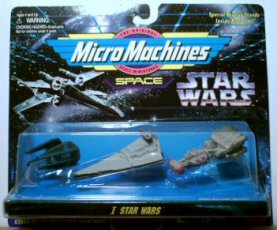
I may well be showing the geekiest of my stripes here, however growing up I remember collecting the Micro Machines packs of ships from Star Wars.  These were nifty collectibles (OK, let's call a spade a spade: they were toys), available in packs of three and encompassing vehicles from every corner of the Star Wars universe.

Please remember: no one ever said I was cool. 
From fan favourite X-Wings, TIE Fighters and Star Destroyers, to rebel ships rarely seen on screen for more than a few fleeting seconds.  One pack even included the 'blink and you miss it' appearance of Luke's T-16 speeder - presumably the same one that he used to bullseye wamprats - which is visible in the background of the farmstead's garage on Tatooine.

While I'd not necessarily expect the same kind of treatment for those vessels that turn up throughout the Mass Effect series, there are still some exceedingly memorable and, lets be honest here, really cool vehicles many of which are available as in-game collectibles that Shepherd can pick up along her/his travels.

These models are then available to view in the Commander's cabin aboard the Normandy. Like this:

That's some fine collectibles you got there, Commander...wanna play?
As a grown-up with an easily disposed-of disposable income, I'm more interested these days in the larger-scale replicas. Something that would look great on a shelf or in a custom built, climate-controlled and hermetically sealed display case. *ahem*

While there are a few commercially available models out there, the range is really limited with a few iterations of the Normandy, an Alliance fighter, Alliance and Turian cruisers and a credit card meltingly expensive model of Sovereign.

And that's it.

What about the Citadel? Where are the wasp-like Geth ships? And what about the Shadow Broker's base? Or Omega? Or the Collectors' Ship?!

Even ground vehicles like the Krogan's six-wheeled tank-slash-APC or the Mako, with it's loose concept of physics would be welcome additions.

With the trilogy having now been put to bed, it's looking doubtful that I'll ever be able to build my own replica of the display case seen in Shepherd's quarters, but should Bioware ever opt to licence out these models at any point in the future, my message is clear:


Tuesday, 24 September 2013

Five websites to refocus your mind


We all know what it’s like: you’re sitting at your desk, eyes unfocused, staring vaguely through your monitor, one hand resting languidly on your mouse.  You’ve been concentrating on a problem for so long that it no longer makes any sense and you’re experiencing disquieting visions of the future.
This is the time to refocus your mind!
The amount of time that we spend at work has been growing steadily and significantly for the last two decades. Alongside time that we’re physically spending at our desks, we’re also working harder. 
And there really is only so much Red Bull that a body can take.
So what’s the most effective way of clearing your mind to refocus on a problem? Simply put: doing something pointless and pleasant.
The following five websites all fall into that category, providing a series of brief distractions that require very little brain power. It’s like giving your grey cells a sit-down.
Of course, everything should be done in moderation and I need to make it clear (probably for some sort of legal reason) that you should only undertake these activities for a couple of minutes.
This is not an alternative to finalising the figures for the Johnson account.
There’s something weirdly captivating about Fly A Line. The little line follows your mouse as you move it around, enabling you to swoop it back and around itself in intricate spirals and knots. 
It’s the simplicity of this website that makes it so captivating. Leave your mouse in one position on the screen and the next image that comes up will feature someone pointing at your mouse. No no, this isn’t witchcraft, just a clever algorithm.  The real beauty of this site though is the choice of photos. Go on, give it a go.
3 Koalas to the max!http://www.koalastothemax.com/
If any of these selections have got an ‘objective’, then this is it. Move your cursor over each circle to make it ‘pop’ into four more.  That’s it, keep going…
For the more creative amongst us who just can’t find a legitimate reason to bring in their canvas and oils.  Select a colour, drag your mouse across an area of the black screen in front of you and populate a multi-coloured nebula of your own creation.  It’s sort of Bob Ross meets Brian Cox.
Perhaps my favourite and the most complicated, Weave Silk lets you create captivating geometric shapes and patterns from a wide selection of colours. Changing the settings for how many folds in a rotation, whether the pattern is mirrored across the centre or spirals outwards adds additional design dimensions.
It’s like your Spirograph went to Woodstock and never came back.
DISCLAIMER: Please remember that this is not intended to offer you an alternative to getting up from your desk and moving around. In fact, it is highly recommended that you spend some time away from your desk during the day!
Now get back to work!

Tuesday, 3 September 2013

Top story of the week

My favourite story of the week so far has got to go to the Solar Death Ray that has been terrorising one (very) small section of London.

It's a very localised problem, this Death Ray
An unexpected side-effect of Land Securities' half-completed "Walkie Talkie" on Fenchurch Street in Central London is that the concave, fully glazed surface of the 37-storey building has acted like a parabolic mirror, focussing the sun's rays into one really, really small area in neighbouring Eastcheap.

Apparently reaching temperatures of 90C, the hotspot is not only hot enough to fry an egg, but is roughly the size of a Jaguar XJ...

Says the BBC:
"Land Securities, which is developing the tower with the Canary Wharf Group, says it is working on a solution and has taken the emergency measure of suspending the parking bays beneath the glare."

So that's alright then: just don't park in that superheated patch of focussed sunlight.

A Team of Top Experts has provided assurance, however, that City Boys will only be in danger of the plastic bits of their cars melting for roughly two hours a day for the next two to three weeks.

Until next year, of course.

"MY EYES!"


Thursday, 29 August 2013

Reader is dead, long live Flipboard!

The news earlier this year that Google would be retiring its workhorse Reader software was met with a low-level grumbling.

This was, after all, one of the most widely-used RSS readers available on the market and people were understandably miffed, many having spent months or years searching the vastness of the internet to pinpoint the best websites and blogs on a given topic.

Reader brought all of these disparate feeds together, offering you a list of potential topics that could be browsed at your leisure.

Flipboard is the evolution of the reader. And it’s jumped straight from the primordial soup into the driving seat of a Bugatti Veyron.

OK, that may be a slight over-exaggeration, but the clumsiness and clunkiness of Reader was always a bit off-putting.  Flipboard, on the other hand, is smooth as silk and classier than Ron Burgandy’s moustache.

So what is it?


“Flipboard is on a quest to transform how people discover, view and share content by combining the beauty and ease of print with the power of social media.”
Originally created as an iPad app, the popularity of Flipboard soon saw it…er…flip over to the iPhone, before an Android version was brought to the market in 2010.

Formatted as a magazine, Flipboard brings together feeds from numerous partner sources and publications, alongside your own Twitter and Facebook accounts.  This provides you with a beautifully laid out, pictorially-driven magazine, automatically updated with fresh content every time that you open it.

In a rush? The handy Cover Stories section is the aggregator’s aggregator, pulling together the most read and shared stories from your various feeds into one place.

Lovely.

So how does it work?
As with any news app, when first configuring Flipboard you’ll be promoted to tell it what topics you’re interested in. There is a decent selection of starter-for-tens to choose from including all of the usual suspects (art, sport, business, politics, science, etc.) and the option to compile your own magazine from the searchable database of more targeted subject matter.


Opening any of the topics (which are all laid out as their own magazines, by the way) will show you a teaser of the articles within, each of which can be tapped through to the main content.

In turn, the next article is accessed by ‘flipping’ the current screen either vertically on a mobile device or horizontally on the iPad, watching one half fold over the other to reveal the next page beneath.
Clever, huh?

Articles can be saved into your own magazine, favourited or forwarded to friends, acquaintances and colleagues through the usual channels.

Sharing is caring!

Handily, Flipboard comes complete with a ‘Read it Later’ button which really comes into its own if – like me – you find yourself saving several hundred web pages a day to Pocket or Instapaper.

You can even select which web service you want to use to open links. Mind = blown.

As a die-hard Chrome fan, this feels like a step in the right direction. Apple: take note.

Even the menu is designed to enhance your experience, encouraging you to explore other topics and magazines, with a one-click subscribe function that will integrate the content you are browsing with your own magazine, or let you check out all of the content shared by individual contributors.


So is it any good?

Frankly: yes.

Flipboard has raised $60.5 million in funding from a host of financial houses and private individuals, including Twitter co-founder Jack Dorsey, Dustin Mokovitz (the other Facebook co-founder) and Ashton Kutcher.

The partners providing the content aren’t particularly small-fry either, with publications of note including the Huffington Post, BBC, Telegraph, Times, NME and Economist.

The ability to incorporate your own Facebook and Twitter feeds into the magazine is a great touch and there is even a ‘Best of Instagram’ magazine available, which should fill your quota of ‘ordinary things looking arty because there’s a black and white filter on them’.

Not only is Flipboard smooth and intuitive, but unbelievably it’s also free.

Download it now from the Apple store and (presumably) from the Android thingy. Marketplace.  That’s the one.

Friday, 23 August 2013

Like nipples on the Batsuit, casting Ben Affleck could be another terrible decision by Warner Brothers

It was all going so well: Christopher Nolan had successfully breathed life back into the Batman franchise, creating an outstanding story arc that took the Bruce Wayne/Batman character neatly from cradle-to-grave, from origin story to the hanging-up of the cape and cowl.

Batman's gadgets were believable (within the context of any comic book movie), his allies and enemies were superbly crafted and the moral ambiguity of his self-appointed vigilante role as Gotham's defender was well balanced.

As with Inception, Nolan didn't pander to the audience and brought a back-to-basics approach to the character, eschewing the neon playground and nippled-Batsuit of the disastrous Schumacher years and drawing inspiration for each film from the storylines of the major comic book arcs themselves (including seminal titles such as Knightfall, The Man Who Laughs and No Man's Land).

The curtain falling on the third and final chapter of The Dark Knight Trilogy came with a sense of closure; this journey was over and it had set a remarkable precedent for all comic book movies to follow.

Then this morning it was announced that Ben Affleck will be playing Batman in Zack Snyder's next Man of Steel film, due out in 2015 (the Guardian summarised some of the Twitter comments on this topic here).

This could go either way.
Whatever your thoughts on Christian Bale, his delivery of Bruce Wayne was impressive and honest: broken and at times fragile, Wayne was trapped in a state of emotional arrested development, using the grief of the loss of his parents to focus his pain and anger at the injustice of the world around him.

As with Daniel Craig's current tuxedoed tenure as 007, The Dark Knight Trilogy offered something of a fresh start for both character and franchise, making it darker, grittier and hyper-real.

And this, I think, was part of the success of these movies: their representation of a flawed, broken and imperfect hero is zeitgeist, speaking to audiences grown cynical of the squeaky-clean image of heroes on the silver screen.

Therein lies my major concern: Affleck's previous pedigree as an actor is shaky at best and with his past so-so performances and lack of charisma hanging like a reputational millstone around his neck, it's difficult to say whether or not he will have the gravitas and depth of character to pull off a convincing portrayal of Bruce Wayne.

He has, of course, had moments of greatness, although they tend to be few and far-between. Changing Lanes with Samuel L Jackson was excellent, as were his turns in Dazed and Confused and of course Good Will Hunting. 

Whether or not this appointment is political and they're trying to woo him into directing the impending Justice League movie (as one friend pointed out this morning), my great fear is that Ben Affleck is going to bring the same level of charisma-free delivery that he did in Daredevil.

Remember this? Urgh. 
The Dark Knight Trilogy wasn't without it's flaws, of course, with plot-holes, issues with Bale's whisky-and-cigarettes delivery and the bizarre God-like voice of Bane in Rises. This was balanced against an outstanding supporting cast throughout all three films (Michael Cane, Gary Oldman, Aaron Eckhart, Heath Ledger, et al) which tugged the movie along through its poorer moments and helped you to overlook its inadequacies.

In Man of Steel, Snyder's offering was everything that a blockbuster should be: big, noisy, visually impressive and above all fun, with great turns from Michael Shannon and Henry Cavill. It, too, was imperfect, littered with plot-holes, shaky dialogue and incredible leaps of faith on the part of the viewer (Zod having his ass handed to him by a scientist at the start of the film despite his assertions that he was bred to be a perfect warrior was one of my favourites). 

While we are more readily accepting of these bumps in the narrative road, the question or whether or not Affleck will be able to cut the mustard as Wayne without turning Batman into a two-dimensional, one trick pony remains to be seen.

"Is it cold in here?"
Affleck is undoubtedly a talented film-maker and since 2010's The Town, his star is once again in the ascendancy, with a number of films currently in production, however he has proven recently that his real talent lie behind rather than in front of the camera.

As with George Clooney's turn as Gotham's Dark Knight - and Val Kilmer before him - it's been proven that it takes more than a popular actor with a good jaw line to play a convincing and reputable Bruce Wayne/Batman.

I like to keep an open mind and am hoping that I will be pleasantly surprised by an impressive turn from a third-rate actor best remembered as being Mr Jennifer Lopez, rather than Warner Brothers consigning one of its most successful franchises to the scrap heap of sentimentality.

But then again I'm an optimistic soul.


Thursday, 15 August 2013

Falling down

I am unashamedly a huge fan of people falling over. There is, as far as I'm concerned, very little that comes close to seeing the look on someone's face at the second they realise that gravity has got the better of them, particularly if it is also accompanied by a flailing-of-limbs.

All the better if they also disappear completely from view.

It may well be schadenfreude, but this particular incident of a Sky Sports report apparently taking a dive for no reason whatsoever is a perfectly good example of all of these elements coming together beautifully:

http://www.theguardian.com/sport/video/2013/aug/14/sky-sports-news-reporter-falls-over-video

While it may be childish, I'm clearly not alone: there's a reason why You've Been Framed endures on the Saturday afternoon schedule!

The first infographic?

This is something a bit special that I stumbled across yesterday, a history of human civilisation in a single (albeit not necessarily very easy to follow) infographic.

Created in 1931 by John B Sparks, 'The Histomap' outlines four thousand years of human history, charting  the rise and fall of cultures and civilisations. Tracing the undulating, bulging and contracting columns provides a brilliant and easily digestible visual indication of not only the size and influence, but also the longevity of these civilisations.

You can trace the Egyptian civilisation, for instance, from its broad-shouldered beginning (albeit halfway through the Middle Dynasty) at the top of the chart to a barely perceptible trickle that creeps its way down to finally meet up with the enormous bulge of the Roman Empire.

Others - such as the Ethiopians - disappear almost as soon as they have appeared, whilst the Huns remain an unassuming yellow line on the right hand side of the chart until the rise of the Mongolians around 450AD.

The clear layout and flow of the Histomap also demonstrates the evolution of different groups within a single civilisation, as highlighted through the ebb and flow of various Indian groups, all within the same, unbroken band.

Click on the smaller version below to zoom in.


See here for the full article.